-
A precast track record most cities don't have
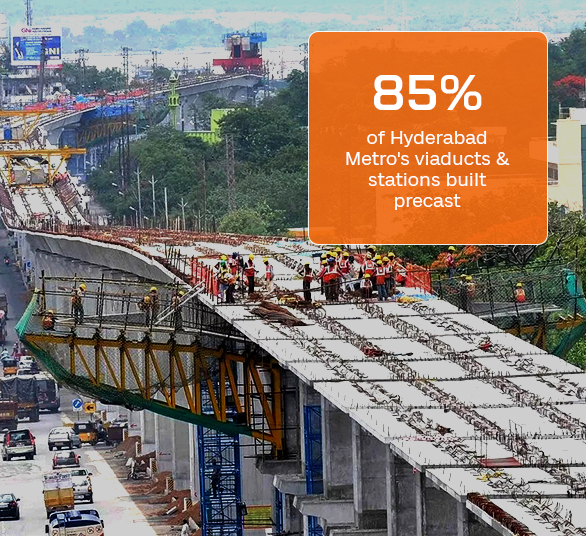
Hyderabad Metro Rail is one of the largest precast infrastructure programmes ever executed in India, built using precast, pre-stressed segmental technology, cast at what remain India's largest urban precast yards — a 72-acre facility at Uppal and a 62-acre facility at Qutubullapur. That capability doesn't disappear once a phase opens; it becomes the foundation for what's next. Metro Phase 2 — 76.4 km across five corridors, a ₹24,269 crore project cleared by the Telangana Cabinet and now before the Centre for final approval — will put those yards, and a fresh wave of precast contractors and suppliers, back to work.
-
A ring road that runs on bridges and box girders
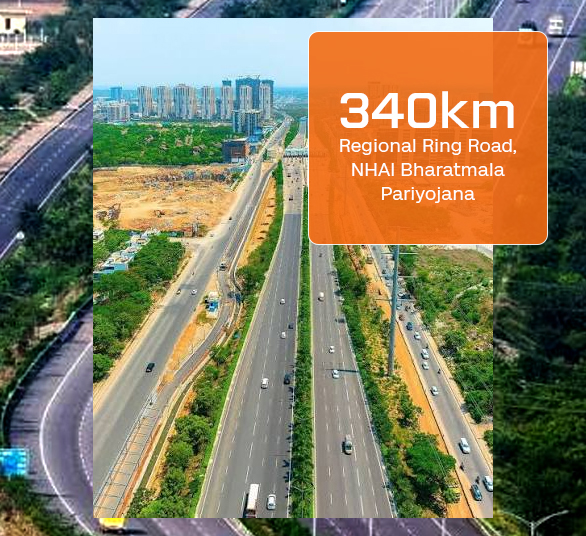
The Hyderabad Regional Ring Road is one of the largest greenfield expressway programmes in the country, with its northern stretch targeted for completion around 2026–27 and the southern stretch to follow by 2027–28. Expressways at this scale mean flyovers, grade separators and box-girder bridges at a pace conventional cast-in-situ construction struggles to match — precisely the segment where precast and segmental construction earn their keep.
-
The world's largest integrated pharma city is rising
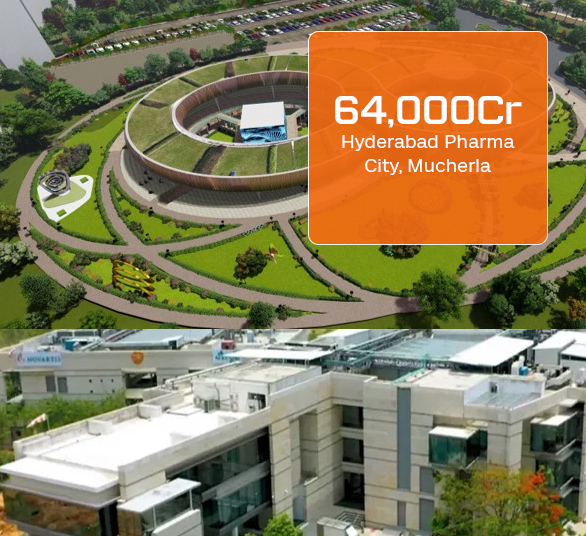
Hyderabad Pharma City is being built as the world's largest integrated pharmaceutical industrial park, targeting over 5.6 lakh jobs as it comes online in phases through 2028. Pharma manufacturing — cleanrooms, API plants, cold-chain warehousing — is a natural precast and prefab category, where speed, hygiene and quality control matter as much as cost. Layer on Genome Valley, already home to 200+ life-sciences companies from 18 countries and producing roughly a third of the world's vaccine doses, now expanding under Telangana's 2026–30 Life Sciences Policy with a Green Pharma City, ten Pharma Villages and a widened Genome Valley 2.0 footprint.
-
Hyderabad's data centre boom needs speed above all else
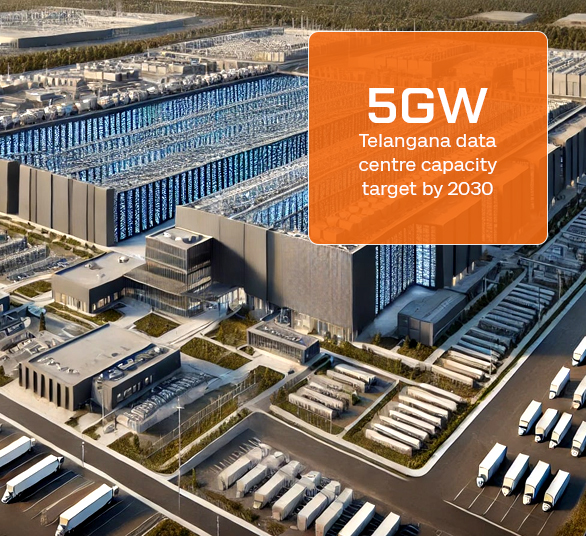
Telangana's data-centre investment pipeline is put at USD 10–20 billion by the state's own Industries Department. Hyderabad has already entered the world's top 30 data-centre markets — 27th globally for operational capacity and 19th for its development pipeline, per Knight Frank's Global Data Centre Atlas 2026 — with Microsoft (₹15,000 crore), Amazon, CtrlS (a 612 MW campus at Chandanvelly), NTT DATA & Neysa Networks (₹10,500 crore, 400 MW) and Nxtra by Airtel all building at scale. Hyperscale data centres are won or lost on time-to-power-on — exactly why global operators increasingly specify precast wall systems and modular MEP skids over conventional construction.
-
The supply base is already forming in the South
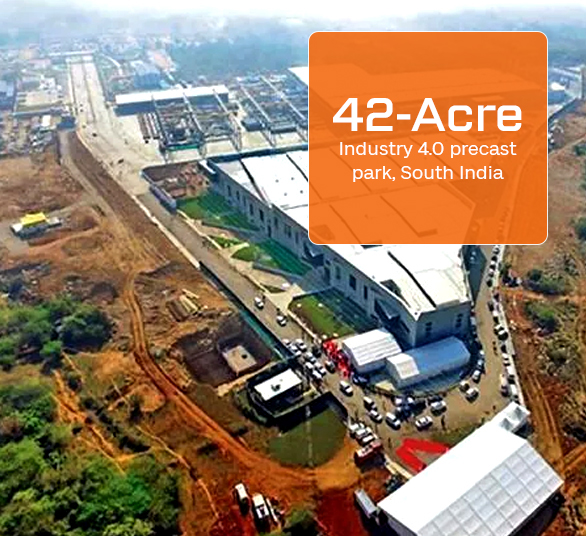
South India isn't just where precast demand is growing — it's where serious precast manufacturing capital has already landed. KEF Infra's 42-acre offsite manufacturing park in Krishnagiri, Tamil Nadu, with robotics-driven precast, sandwich-wall and modular MEP production lines, is proof that global-scale precast manufacturing is viable in the region. Hyderabad, at the centre of Telangana's "Telangana Rising 2047" ambition to build a $1 trillion state economy by 2035, is positioned to become the demand-side hub this Southern precast supply base has been waiting for.
-
The numbers behind the moment
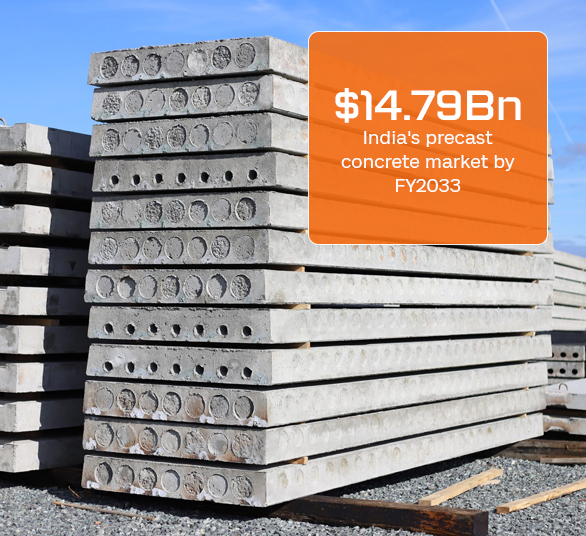
India's precast concrete market is projected to grow from USD 7.31 billion in FY2026 to USD 14.79 billion by FY2033 — a 9.2% CAGR (Markets and Data). Telangana's infrastructure, pharma and data-centre pipelines alone represent a meaningful share of where that growth has to be built. India Prefab & Precast Expo 2027 is where the companies positioned to capture it meet the people commissioning it.